Sunday, February 22, 2015

Be Cool

Be Cool

You know that scene in Dog Day Afternoon where Al Pacino is drenched in sweat?  That's how I feel right now.  All of my best laid plans are falling apart, and my partner in crime is losing his mind.  I had a casting session two weeks ago and one person showed up.  I had pretty much expected this result, but I had a deep hope that I would get a few people.  For the next week I had a deep existential crisis.  I called my mother every day.  It was a dark period in my life.  I've started revamping my script to work with a skeleton crew, and I've begun storboarding my scenes.  I hope to start shooting next week.  I just need to find one more person to be in my film, and I have a few promising leads.  I'm honestly just afraid to think about my project as a whole because it's petrifying.  Hopefully things will work out, I'll keep working on it every day and calling my mother so she can tell what happened last week on "Once Upon a Time."

Saturday, February 14, 2015

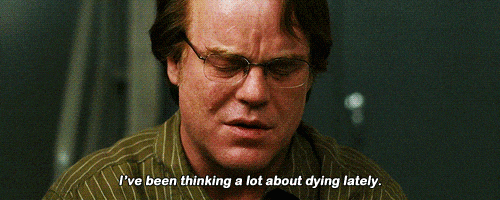
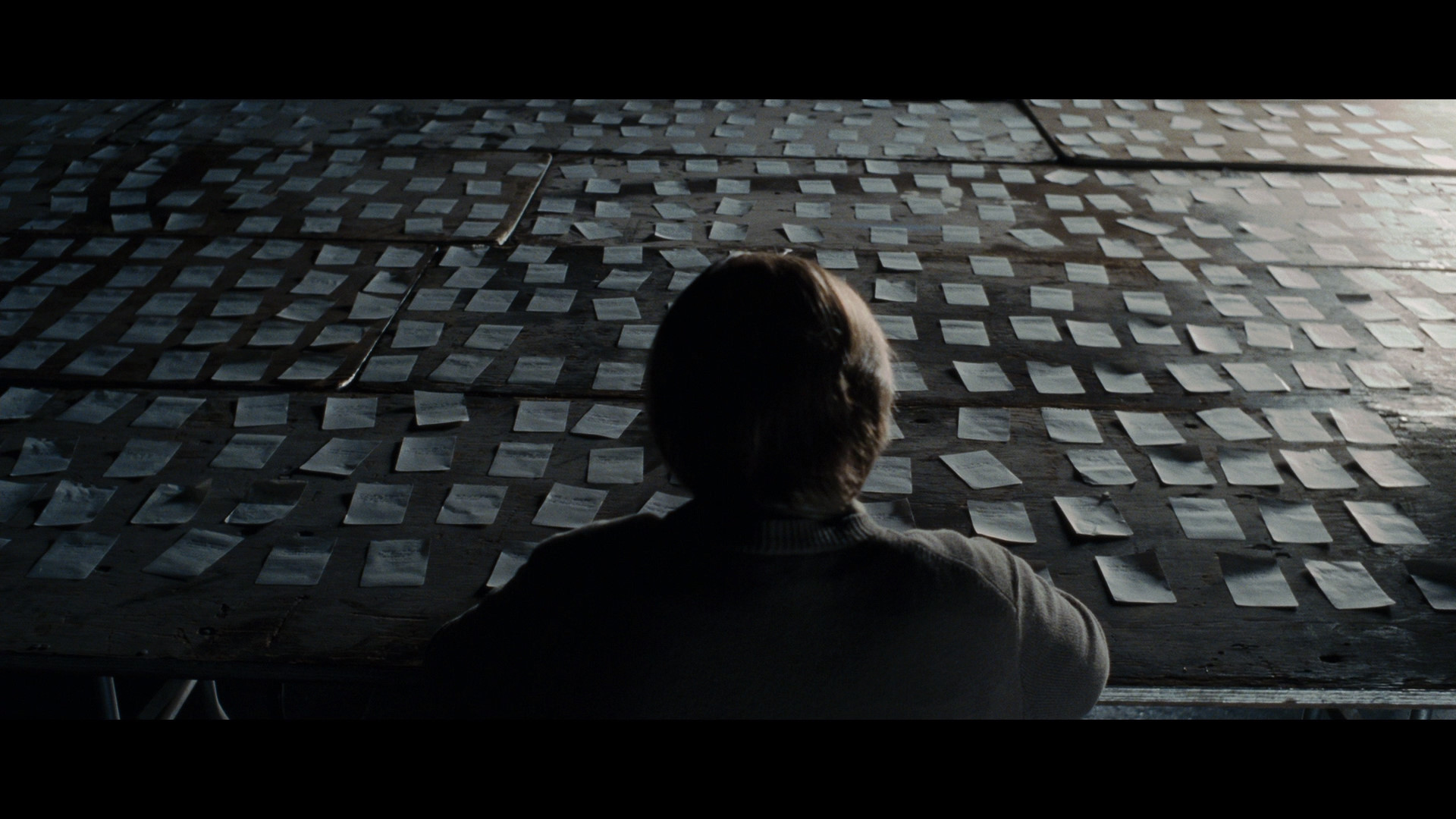
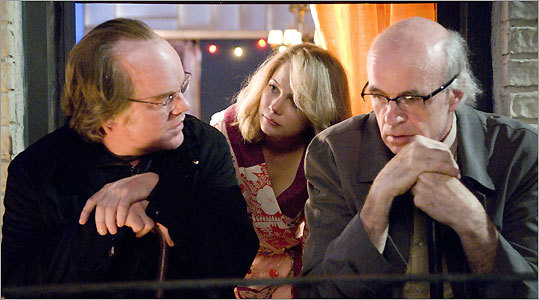
Synecdoche, New York

GLGLF N MESR-SIY HEWC WEC.


Synecdoche, New York by Charlie Kaufman is one of the best movies every made.  I can say that because I've watched roughly half of IMDB's top 250 movies list.  It's the perfect blend of postmodern rumination, over-indulgence, and slapstick humor, the three qualities people look for in movies.

I've been toying with an idea similar to this film for a long time, examining the relationship between creator and created.  One of the first things I did to prepare myself for my capstone was to buy this screenplay along with the screenplay for Paul Thomas Anderson's Punch Drunk Love which also deals with themes I wanted to examine.  I was interested in examining the more technical aspects of screenplays, specifically how different writers dealt with dialogue within groups of people.

The biggest thing that reading Synecdoche made me realize was that time doesn't need to be a constraint.  Time can pass fluidly; you don't need to denote every time shift with a title card reading "2 months later."  Through dialogue or even set design, you can imply a passage of time. Synechdoche takes place over a period of roughly 50 years, but the time and date are never explicitly told to you.  You are told through dialogue, through expiration dates on milk cartons, and through the aging of characters.


When you reduce time to nothing more than a prop, a whole world of possibilities open up.  I have this tendency to try to make thing as realistic as I can, but in the end that's really boring.  Art imitates reality, it shouldn't mirror it.  Mirrors do that.  Someone should punch me in the face.


Monday, February 2, 2015

In Bruges


In Bruges

So far so good I hope.  I finished a first draft of my script last week, and I've been tweaking it the past couple of days.  Tomorrow, I'm putting up flyers for auditions.  Right now I'm pretty optimistic about things, all the while knowing that no one is going to show up for the auditions.  I can't breathe thinking about it.  I wake up in cold sweats.  My therapist tells me I should see a therapist.  That made me laugh more than it should have.

Everything hinges on casting.  I'm hoping I can get four people who are willing and able to follow me down this rabbit hole; if not, I'm going to have to call in every favor I'm owed, which is two.  In the meantime, I'm tweaking my script, as I said before, and I'm starting to storyboard.  If casting goes well, I should be on track to getting this thing done!

Right now, my project is a lot like George Clooney's character from Up in the Air, up in the air.  This time next week, things will start to take shape, for better or worse.

Friday, January 16, 2015

A Modest Proposal

A Grandiose Proposal

For my capstone project I am going to attempt to write and direct a short film inspired by the works of post-modern and meta fiction artists such as Charlie Kaufman, Jorge Louis Borges, Thomas Pynchon, Kurt Vonnegut, and Federico Fellini.  Jason McKahan has agreed to be my director.
Escher

The story will follow an author who is unable to get his book published because publishers feel it lacks heart.  In an effort to write a story with heart, he sets out to write a roman à clef about his own life, but he soon becomes lost in the world he has created.

I am currently in the writing stage of my project.  I have outlined my script and am working on an in depth treatment of sorts. Once finished, I will begin working on the actual script.   I'm not sure how long the script will be, but I estimate it will be around 30 pages, which should make the film around 30 minutes.
Drescher

I have been thinking about the aesthetic and technical aspects of production.  I have already started experimenting with some of the special effect shots that I am considering in order to gauge whether they will actually work and whether they are worth the time I will have to put into them.  I met with Jason on Friday to talk to him about one of the more daunting, at least for me, concepts I have been toying with.

The term "roman à clef" literally means "Book with a key."  This works out great for me because my early concept for the film was the author in the story would be able to access the world of his story by inserting a special key into any door.  The shot that I was worried about was having the main character open a door in in one place, walk through the doorway, and be in an obviously different space, then being able to see through the doorway into the space he came from before he closed the door.  He gave me a few ideas that I hadn't considered, and I plan on experimenting with them this week to see what works.

Caden and Caden from Synecdoche, New York
As far as research goes, I'm not exactly sure what I'm going to look into.  For the past couple months I have been seeking out films and books that deal with similar themes and ideas, and I've even read a couple different screenplays in order to study scriptwriting techniques.  My next step in my research will probably be to look at more production techniques such as lighting and camera angles and such, but I feel like I need to get my script finished before I get myself hung up on how the film will actually look and feel.  All I know right now is that I want it to feel infinitely large and infinitely small at the same time.  It's bound to drive me crazy, but it'll be one hell of a trip.

Monday, September 29, 2014

Mr. Time Magazine

 Mr. Time Magazine
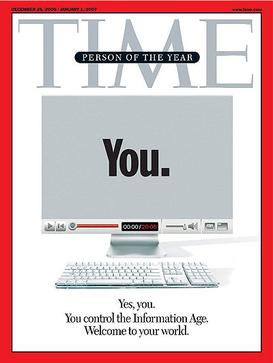
When Time magazine isn't pandering to is barely literate audience or making goody-goody with mass murderers (Ex 1, Ex 2, Ex 3), they nominate lowlife scum like Edward Bernays as one of the most influential men of an entire century.  Granted, probably the only reason they did this was because if they got on Bernays' bad side, he would squash them in his soft, sweaty hands.  They've got too much to lose by printing the truth. JOURNALISM USED TO MEAN SOMETHING IN THIS COUNTRY!

Sorry about all that.  I just watched the Secret Life of Walter Mitty, so I have some pretty strong things to say about Mr. Time Magazine and Adam Scott's beard.  I digress.

In all honesty, Ol' Eddy B. deserved to be nominated as one of Time's "People of the Century" much the same way that Adolf Hitler deserved it back in '38.  Bernays revolutionized deception.  Con-men used to have to knock on your door before they could steal away your money and wife.  Bernays figured out a way to con an entire society without ever leaving his doorstep.  He claimed to use the techniques of his crotchety uncle Siggy Freud, but really what he did was take a singular fundamental aspect of it.

Freud built all of his ideas on the basis that people are fighting an unconscious war between the amoral, impulsive id and the rigid, moral superego.  Interestingly enough this seems to be more or less an expansion of Hobbes proposition that, "Every man is an animal."  Nobody talks about that though do they?  I spit truth and hellfire.

A loving family and admirers of Bernays
Anyways, whenever the big men needed to sell something to the public in the past, whether it be tissue wipes or engaging in a war that no one really wanted to get involved in, they had always tried to appease the superego, giving fact based pitches.  Bernays said phooey to that noise and decided to appeal to the id.  He saw people as emotional beings that could and should be manipulate for the greater good.  The greater good of whom I ask
pompously?  The greater good of the fat cats up on Wall Street and Capitol Hill.

And of course, Bernays approach worked.  He was able to convince people to do things not that they needed to do, but that they wanted to do.  Once he figured out how to do this, he started convincing people what it was they wanted.  He built up a whole new way of interacting with mass audiences called propaganda...ahem... public relations.

You want to know why our society is crippled by consumerism, look to Bernays.  Is he pure evil incarnate?  Yes.  But he would have had no power if the people hadn't listened to them.  If even we may not have had a choice in the matter, we are still to blame.  And even if Bernays had not risen to power the way he did, someone else would have.  I can sleep soundly at night knowing that the man responsible for the destruction of our society was a blue-blooded American through and through
.

Monday, September 15, 2014

Sing Me A Song, You're the Camel Man

Sing Me A Song, You're the Camel Man


Surface Meaning: A camel,  a lady sitting on top of a car, palm trees, the “Hollywood” sign, the text, “Smooth Character,” and a box of cigarettes.

Advertisers Intended Meaning: People who smoke Camel Lights are attractive, rich and know how to have a good time.


Cultural Meaning:
·         The Hollywood Sign:  This sign is something that resonates with practically everybody.  Everyone knows about Hollywood, California, the home of movies stars and super models.   Because the Hollywood Sign is in the background we know that the people/camels portrayed in this ad are important, rich, and cool.
·         The Car:  The car that the lady is sitting on looks like a red corvette style car.  A red sports car is also engrained in our society as a symbol of wealth and greatly attributes to the cool factor.  You smoke this cigarette and you’re as cool as a red Corvette.
·         The Lady:  The lady is an attractive leggy blonde, every guys dream come true.  The implication is that people who smoke these cigarettes are cool enough to land a dame like that, as well as virile enough to satisfy her.
·         The Clothes:  The camel man is dressed like a character from Miami Vice, which even though it has Miami in the title it still make you think of Hollywood because it’s a movie.  The clothes once again reiterate a cool vibe.  The guys in Miami Vice were cool, right?
·         “Smooth Character” :  This ad almost looks like it’s a movie ad.  It has everything you’d want from a summer blockbuster, fast cars, hot chicks, and anthropomorphic desert animals.  Smooth character not only seems to imply that these cigarettes give you a smooth character, it’s almost like smoking them will make you the lead in your own kind of Hollywood movie.
·         The Glasses:  Both of the “people” in this advertisement are wearing sunglasses.  As we all know sunglasses make anybody look cool, but it also creates some distance between the characters and the audience.  We can’t see them as well as they can see us.  It’s almost as if, even though the audience can see all these good things that smoking Camels can bring, you don’t know everything yet.  You have to smoke one to become truly enlightened.

Friday, September 12, 2014

The Harryhausen

The Harryhausen
Daniel Day-Lewis.  The only actor people talk about.
How many movies have you seen where there is one actor/character that stands out?  They might not have even been in it for very long, but it's that performance that sticks with you above all else.  This can say a lot about a specific actor or actress, but it says a lot more about everyone else in the movie.  There were dozens of other performers on screen that you may never remember.  Hollywood is filled with forgettable faces, forgettable performances, forgettable people.   Only a select few ever rise above the clutter to achieve recognition, and that is an amazing feat in and of itself.

Nobody should know who Ray Harryhausen is.  He was a guy with too much time on his hands, who never appeared on screen and, and who's looked 80 years old since he was 27.  Nonetheless, he has had a profound effect on many of the movies we see today, and with good reason.  For over 20 years, Harryhausen defined what special effects were in movies.  He brought creatures and stories to life that people never would have thought possible.  Everything about the guy is amazing.  How he could take balls of rubber and strips of wire and create terrifying monsters.  How he could spend hours moving puppets in complex patterns, keeping track of every minute detail in his head.  What's most amazing is how he took these lifeless blobs and made them feel like a real character, something with a personality.

He had a lot of tricks for giving his creations life.  One thing I noticed is that he often gave his characters a humanoid shape.  It might sound like a small detail, but because it resembled a person, it was much easier to convey emotions.  The audience was able to pick up on what the character was feeling much easier because they understood the basic anatomy of the character.

The main reason Harryhausen's monsters feel so alive is because of Harryhausen himself.   He wouldn't just design a monster and make up its movements as it went along.  He would do extensive research on different types of animals and their movements to try and figure out this creature would actually move.  For instance, when he worked on Mighty Joe Young designing an ape, he went to zoos and made recordings of gorillas walking around so he could study their movements and recreate it.  He did his best to make the monsters as real as possible, even if it was a stone lady with snake hair.  It was this attention to detail and devotion to making a good product that set him apart from pretty much every other special effects animator at the time.  To him, these creatures weren't just monsters for the main characters to run away from, they were characters themselves who deserved just as much time and devotion.